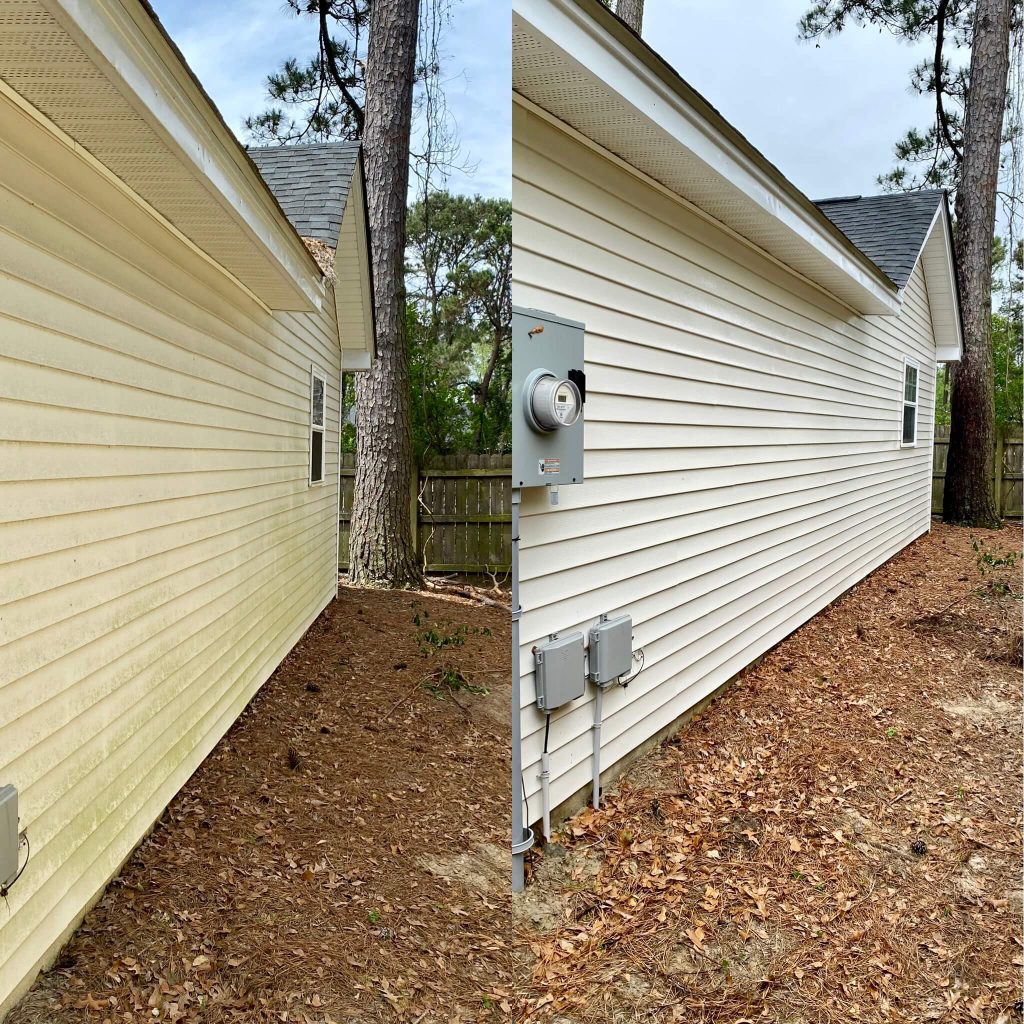
For most Mount Pleasant homes, soft washing is the safe way to clean siding. It uses low water pressure and a cleaning solution that kills mildew and algae at the root. High pressure belongs on concrete and other hard, flat surfaces. On vinyl, Hardie board, stucco, painted brick and tabby, it can crack, gouge or force water behind the wall.
Soft washing is a low-pressure cleaning method. In a typical soft wash, a technician applies a cleaning solution to the siding, gives it time to work, then rinses at roughly the pressure of a strong garden hose.
The solution does the cleaning. Mildew, algae and the black streaks you see on the shady side of a house are living growth. A detergent built for that job breaks them down and kills the spores, so the siding stays clean longer than it would after a plain water rinse.
Pressure washing works the other way. It relies on force. A narrow, high-pressure stream strips dirt off a surface mechanically. That is exactly what you want on a stained driveway. It is not what you want on the outside walls of your home.
Siding is built to shed rain falling from above. It is not built to hold up against a jet of water aimed at it from below or from the side.
A few things can go wrong:
If you want the longer list of ways a well-meaning wash goes sideways, see our post on common pressure washing mistakes.
Homes around Mount Pleasant use a wide mix of exterior materials, and each one reacts to water and pressure differently. Here is how each should be handled.
| Surface | Method | Why |
|---|---|---|
| Vinyl siding | Soft wash | High pressure can crack panels and push water behind the laps. |
| Hardie board (fiber cement) | Soft wash | The painted finish can be stripped or etched, and water forced into seams can cause swelling at cut edges. |
| Stucco | Soft wash | Stucco is porous and can chip or gouge. Water driven into cracks can get behind the finish. |
| Brick | Soft wash, with care on mortar | Brick is tough, but mortar joints are softer and can erode. Painted brick needs the gentlest approach. |
| Tabby | Soft wash, very gentle | Tabby is a soft mix of lime, sand and oyster shell. High pressure can wear the surface away. |
| Concrete driveways and walkways | Pressure wash | Hard, flat and durable. Force is what lifts embedded dirt and stains. |
Vinyl is a popular siding choice on newer homes. It is durable against weather but not against a pressure washer. Panels can crack, and the lap joints can let water in when sprayed from below. A soft wash removes green algae and dirt evenly and leaves the panels intact.
Fiber cement is strong, but its protection comes from the paint. Aggressive pressure can wear that paint, and water forced into seams and cut edges can lead to swelling and other moisture problems. Low pressure and the right detergent protect the finish you paid for.
Stucco looks solid, but it is porous and holds onto mildew in its texture. High pressure can chip the surface and push water into hairline cracks. A soft wash reaches into the texture with solution instead of force.
Brick can take more than most surfaces, which is why people assume it is fine to blast. The weak point is the mortar between the bricks. Too much pressure can wash out the joints over time. Painted brick needs the same care as any painted surface.
Tabby is part of Lowcountry building history, and it is soft. It should be cleaned gently, with low pressure and patience.
Soft washing is not a replacement for pressure washing. It is the right tool for a different job.
Concrete driveways, sidewalks and other hard surfaces respond well to controlled high pressure. Professionals often use a surface cleaner on flat concrete because it keeps the spray even and helps prevent stripes. For driveways and other concrete, see our pressure washing service. A whole-property clean often calls for both methods: soft wash on the house, pressure on the flatwork.
A professional soft wash is quieter and slower-looking than people expect. There is no roaring stream peeling grime off in strips.
In a typical soft wash, the solution goes on, sits long enough to work, and rinses off clean. A careful crew will also look out for plants and landscaping along the way.
With us, you don’t need to be home for most exterior jobs. You get upfront pricing, so the price is agreed before anyone starts. And if we miss a spot, we come back and fix it.
If you are deciding when to schedule, our guide on when to pressure wash your house covers timing.
You can, but it is not the safest choice. High pressure can crack vinyl panels and push water behind the laps, where it may lead to hidden moisture problems. Soft washing cleans vinyl just as well and kills the algae and mildew instead of only knocking them loose.
Yes. Low pressure protects the painted finish on fiber cement and keeps water out of the seams and cut edges. It is the method generally recommended for Hardie board and similar siding.
On siding, it usually works better. Pressure only removes what it hits, while the cleaning solution in a soft wash treats the growth itself. That tends to keep siding cleaner for longer in a humid climate.
A careful crew protects landscaping before, during and after the wash. Ask any company you hire how they handle plants and beds around the house. It is a fair question and a good sign when they have a clear answer.
If your siding is turning green or gray, a soft wash is the safest way to bring it back. See our soft washing service for details, call (843) 471-0799, or request a quote online. We are fully insured, with a certificate of insurance on request.