Orange rust stains on a driveway or sidewalk almost always come from iron. The most common source is irrigation water from a well, which can carry dissolved iron that turns orange once it dries on concrete. Fertilizer and metal furniture cause the rest. The stains return because the source keeps delivering new iron until you change it.
Rust is iron oxide. When iron-rich water dries on concrete, the iron reacts with oxygen and leaves an orange deposit. Concrete is porous, so that deposit settles into the surface rather than sitting on top.
That detail matters for cleaning. Dirt, mildew and algae sit mostly on the surface and respond well to water pressure and the right detergent. Rust has bonded into the pores of the concrete. Spraying it harder does very little, and pushing too much pressure at it can scar the surface while the stain stays put.
Irrigation that draws from a well can carry dissolved iron. Every time the sprinklers run, they mist that water across your driveway edges, sidewalk and curb.
The pattern gives it away. Irrigation rust shows up as fan-shaped or arc-shaped orange bands that line up with where the sprinkler heads throw water. It is usually heaviest closest to the head and fades toward the middle of the slab.
Many lawn fertilizers contain iron because it helps grass green up. When granules bounce off the spreader onto concrete and get wet, each one can leave a small orange speckle. A scatter of dots along the driveway edge after a lawn treatment is a common sign.
Patio chairs, grill stands, wrought-iron planters and tools left out in the rain all leave rust behind, usually in the shape of whatever caused it: rings, rectangles or chair-leg footprints.
A rust stain is a symptom. If the source is still active, the concrete will stain again no matter how well it was cleaned.
This is also why a standard wash alone disappoints on rust. The concrete comes up clean everywhere except the orange bands, which stand out even more against the brighter slab.
| What you see | Likely source | How to stop it returning |
|---|---|---|
| Orange arcs or fan shapes along the slab edges | Sprinkler overspray from well water | Adjust or redirect heads; ask an irrigation tech about iron filtration |
| Small orange dots near the lawn edge | Iron-containing fertilizer | Blow granules off hard surfaces before watering; ask your lawn service to use a deflector |
| Rings, squares or footprints | Metal furniture, planters, tools | Add feet or pads, or move metal items off the concrete |
| Streaks running down from a fixture | Rusting railing, hose bib or hardware | Repair or replace the rusting metal |
Before anyone cleans the stain, it pays to cut off the supply.
Adjust your sprinkler heads. This is the single most useful step for irrigation rust. Most rotor and spray heads can be turned or have their arc reduced so they water the lawn instead of the concrete. A nozzle with a tighter pattern helps too, and an irrigation company can handle it during a routine check.
Ask about the water itself. If your system runs on well water with noticeable iron, an irrigation or water treatment specialist can tell you whether filtration or a treatment system makes sense for your setup.
Keep fertilizer and metal off the slab. Blow stray granules back onto the lawn before the next watering, and put rubber or plastic feet under chairs and planters.
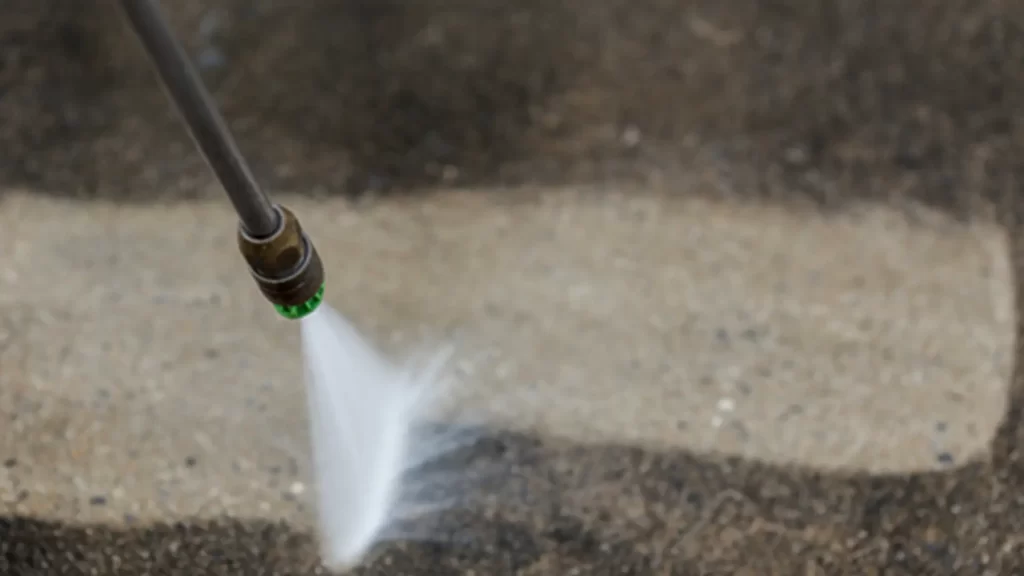
Removing rust from concrete is a chemistry job more than a pressure job. Professionals generally use cleaners made specifically for rust on masonry. These products react with iron oxide and turn it into a compound that dissolves in water, so it can be rinsed out of the pores instead of blasted.
Done well, the work usually starts with confirming the stain really is rust, since red clay, leaf tannin and some algae can look similar and each needs a different approach. Surrounding plants and surfaces are typically protected, the treatment is given time to work, and the area is rinsed at controlled pressure so the concrete surface is not damaged. Washing the whole slab afterward helps the treated area blend in.
This guide doesn’t include DIY mixing instructions for rust removers. Acid-based products can etch concrete, harm plants and react badly with other cleaners. If you try a store-bought product, follow its label exactly and test a hidden spot first. Our guide to common pressure washing mistakes covers why high pressure on its own causes more harm than good.
Once the source is under control, routine cleaning keeps the concrete looking even. Our post on how often to pressure wash your driveway covers a realistic schedule for Mount Pleasant weather. New orange marks between cleanings usually mean a sprinkler head has drifted.
Orange stains on concrete are almost always rust. The usual causes are well water from your irrigation system, iron-containing fertilizer, or metal furniture and planters. The shape of the stain usually points to the source.
Pressure alone rarely removes rust, because the iron has settled into the pores of the concrete. Rust generally needs a cleaner designed to dissolve it, followed by a controlled rinse. Turning the pressure up to force it out can scar the surface.
Adjust the sprinkler heads so they water the lawn and beds instead of the concrete, and reduce the spray arc where heads sit near hard surfaces. If your system uses well water with high iron, ask an irrigation or water treatment specialist about filtration options.
Yes, if the source is still active. A professional treatment removes the existing stain, but sprinklers, fertilizer or metal items will create new ones over time. Fixing the source is what keeps the concrete clean.
If your driveway, sidewalk or patio could use a cleaning, call Mount Pleasant Pressure Washing at (843) 471-0799 or request a quote online. Learn more about our driveway and concrete cleaning. You get upfront pricing agreed before work starts, you don’t need to be home for most exterior jobs, and if we miss a spot, we come back and fix it.